01Members notice the smell first
Gyms spend heavily on equipment, lighting, music and changing rooms, and then a member picks up a towel from the reception stack, holds it to their face after a hard set and catches a sour, musty smell. In that moment, the new rowing machines and the polished floors count for very little. Smell is personal and immediate, and members link it straight to cleanliness. A gym whose towels smell is a gym members quietly start to doubt.
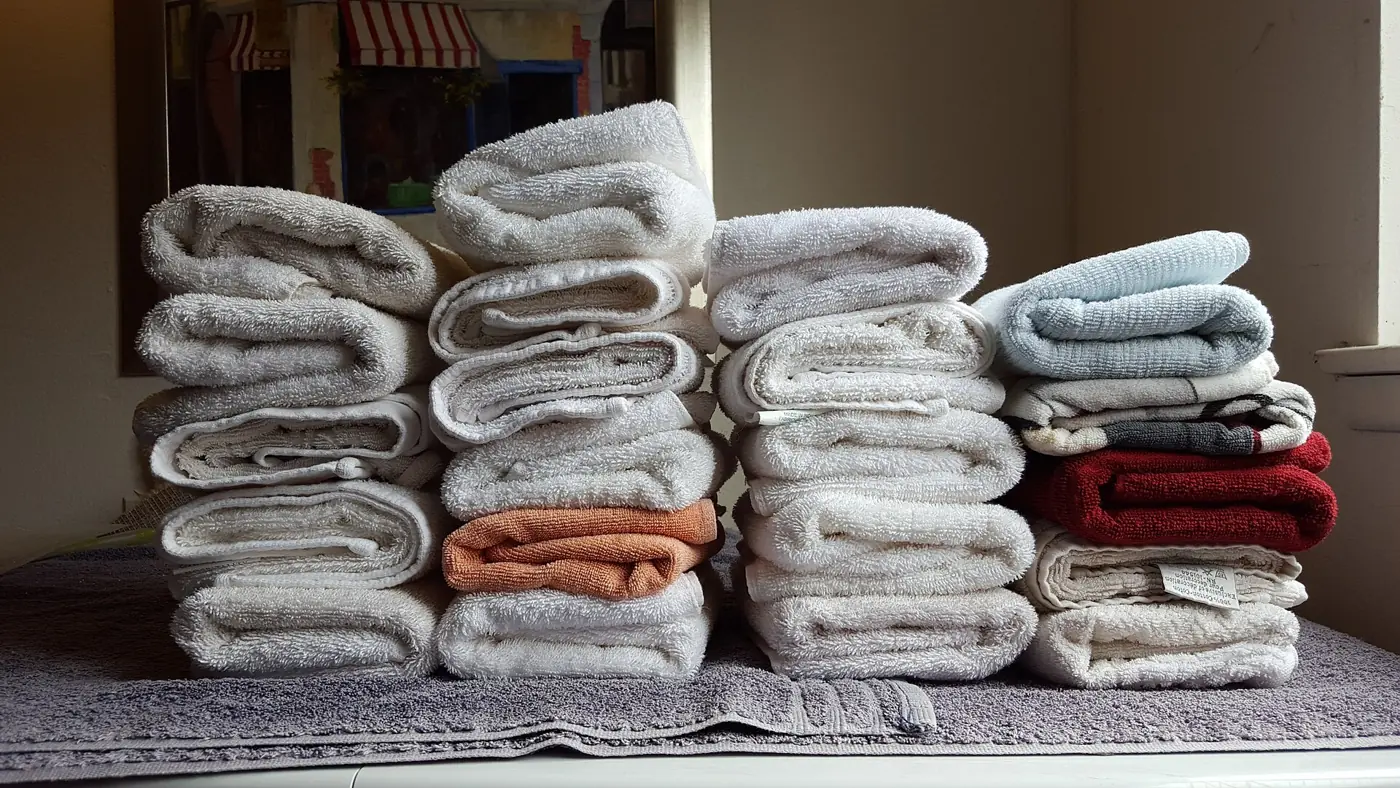
The frustrating part for owners is that the towels often look perfectly clean. They are white, folded neatly and dry to the touch. The smell only appears when the towel warms up or gets damp against sweaty skin. That is a clue to what is going on, and it explains why simply washing towels more often does not always fix the problem.
This guide explains where gym towel smells come from, why some towels smell even when they look clean, and the habits at every stage, from the moment a member drops a towel in the bin to the moment it goes back on the shelf, that keep towels fresh. It is written for gyms, fitness studios, yoga and Pilates studios, boxing and martial arts clubs, and leisure centres that provide towels.
02What the smell actually is
Fresh sweat has very little smell. The odour people associate with gyms comes from bacteria breaking down sweat, skin cells and oils. Those bacteria live naturally on skin and transfer to towels with every wipe.
Sweat and skin
Sweat is mostly water with salts, but it also carries small amounts of proteins, fats and other compounds. Towels also collect dead skin cells and the natural oils skin produces. Together, these make an ideal food supply for bacteria.
Warm and damp
Bacteria multiply quickly in warm, damp conditions. A sweaty towel balled up in a bin in a warm gym is close to perfect for them. Within hours, the population and the smell grow dramatically.
Mildew and mould
If towels stay damp for longer, perhaps overnight or over a weekend, mould and mildew can start to grow too. That brings the classic musty, damp-cupboard smell, and sometimes small grey or black spots.
Why it survives washing
If the wash does not fully remove the oils and residues, or does not reach a temperature and detergent strength that deals with the bacteria living deep in the loops, some survive. They stay dormant while the towel is dry and wake up as soon as it gets warm and damp again. That is why a towel can smell fine on the shelf and sour the moment it is used.
03The damp gap: where most smells begin
The most important cause of smelly gym towels is the time between use and washing. Call it the damp gap. The longer it is, the more bacteria grow and the harder the smell is to remove.
Where towels wait
- In open bins in changing rooms or on the gym floor.
- In sealed bin bags in a back room.
- In laundry sacks waiting for collection.
- In a pile next to the on-site washing machine.
- In a hot van or a warm corridor.
Shortening the gap
- Empty towel bins several times a day in busy gyms.
- Use ventilated bins and bags, not sealed plastic.
- Store used towels in a cool, airy place, never a warm cupboard.
- Arrange collections or washes so towels are not left for days.
- Never leave wet towels over a weekend.
Spread, do not pile
A big pile of wet towels heats up in the middle, rather like a compost heap. Spreading them out or using several smaller bins keeps them cooler and slows bacterial growth.
04Towel bins and bags
The humble towel bin has a bigger effect on smell than most gyms realise.
Ventilation
Solid, lidded bins trap heat and moisture. Bins with open sides, mesh or ventilation holes let air circulate. For laundry sacks, breathable fabric or mesh is better than plastic.
Size
Very large bins encourage towels to sit for longer before anyone empties them. Smaller bins that fill quickly prompt staff to empty them more often.
Placement
Keep towel bins away from heaters, saunas and steam rooms. A bin next to a sauna door is the worst place in the building.
Cleaning the bins
Bins themselves pick up smells and bacteria. Wipe and disinfect them regularly, and wash fabric liners with the towels.
05Washing to remove the smell
Washing gym towels is not just about getting them to look clean. It is about removing the sweat, oils and residues that bacteria feed on.
Temperature
Cotton gym towels can usually be washed hot. Higher temperatures, combined with the right detergent, are much better at removing body oils and reducing bacteria than cool washes. Always follow the label, but gym towels chosen for regular hot washing make this much easier.
Detergent and dose
Use a detergent suited to heavy body soil and your water hardness, at the right dose for the load. Too little detergent leaves oils behind; too much leaves residue that traps smells.
Load size
Overloaded machines cannot wash or rinse properly. Towels are bulky and absorb a lot of water, so they need more room than you might think.
Rinsing
Thorough rinsing removes detergent and loosened soil. Residue left in the loops can hold odours and feed bacteria.
Pre-treatment
Towels from very sweaty classes, such as hot yoga or spin, may benefit from pre-treatment or a pre-wash to remove heavy sweat before the main wash.
06Softener and residue build-up
Many gyms add fabric softener to make towels feel nicer. It often makes smells worse.
How softener traps smell
Fabric softener coats fibres with a thin waxy layer. On towels, this layer builds up in the loops, reduces absorbency and traps oils and bacteria underneath it, where detergent cannot reach them. The towel may smell of softener when dry and sour when wet.
Detergent build-up
Overdosing detergent, especially in hard water, can also leave residue that builds up and traps odours.
Stripping build-up
Towels with heavy build-up may need a special wash to strip residues, sometimes over more than one cycle. A laundry can do this as a one-off reset, after which normal washing without softener keeps them fresh.
07Drying all the way through
A towel that is not fully dry will smell. It is that simple.
Check the thickest parts
Hems, folded edges and the centre of thick towels dry last. A towel that feels dry on the surface may still be damp in the hem. Check before folding.
Do not fold warm and damp
Towels folded slightly damp and stacked warm create a perfect environment for bacteria to regrow. Let towels finish drying and cool briefly before folding.
Do not over-dry either
Over-drying does not make towels fresher; it makes them hard and weakens the fibres. Dry until dry, then stop.
08Storing clean towels
Clean towels can pick up smells again if they are stored in the wrong place.
- Keep clean towels away from changing room humidity, showers, saunas and pools.
- Store them on open shelving or in ventilated cupboards, not sealed boxes.
- Do not stack clean towels next to used towel bins.
- Rotate stock so towels do not sit for weeks.
The reception stack
Many gyms keep a stack of towels at reception. If reception is near the entrance, it stays relatively dry. If it is next to the changing rooms or pool, humidity can make towels feel damp and smell faster.
09Member habits that make it worse
Some causes of smell are in members' hands.
- Taking towels into saunas and steam rooms, then dropping them in the bin soaking wet.
- Leaving towels on the floor or on equipment in hot areas.
- Using towels to wipe equipment sprayed with cleaning products.
- Taking towels home and bringing them back damp.
Gentle guidance
A small sign by the bins asking members to put towels in the bin, not on the floor, and separate spa towels from gym towels where you provide both, helps. Keep the tone friendly.
10Fixing towels that already smell
If your towel stock already smells, the fix is usually a combination of a reset and a change in habits.
The reset
A thorough wash designed to strip residue and remove body oils, at a suitable temperature, with good rinsing and complete drying, often brings towels back. Very old or heavily affected towels may not recover fully.
Then change the routine
Without changing the damp gap, softener use or drying habits, the smell will return within weeks.
When to replace
If towels still smell after a proper reset, are thin, or have visible mildew spots, they are usually best replaced.
11Hot yoga, spin and high-sweat classes
Some classes produce far more sweat than others. Hot yoga in heated rooms, spin, high-intensity interval training and boxing classes can leave towels soaked through in under an hour.
More towels, faster turnaround
High-sweat classes use more towels per member, and those towels are wetter. They need emptying from bins more often and getting to the wash faster than towels from the weights floor.
Separate handling
Some studios bag towels from hot classes separately and wash them first, or give them a pre-wash. This prevents a few soaked towels from making a whole bag of lightly used towels smell.
Heated rooms
In hot yoga studios, the room itself is warm and humid. Towels left in the room after class start to smell quickly. Clear them from the room straight after each class.
12Gyms with their own washing machines
Many gyms and studios wash towels on site. That gives control over timing but brings its own smell risks.
Machine hygiene
Washing machines used constantly for sweaty towels can develop mould in the door seal, detergent drawer and drum. A machine that smells will pass that smell onto towels. Clean seals and drawers regularly and run maintenance cycles as the manufacturer recommends.
Dryer capacity
The most common on-site problem is a dryer that cannot keep up with the washer. Towels get folded before they are fully dry because the next load is waiting. If your dryer is the bottleneck, towels will smell.
Ventilation
Laundry rooms in gyms are often small, windowless and warm. Damp air in the room slows drying and lets clean towels absorb moisture. Good ventilation or an extractor fan makes a real difference.
Lint
Towels shed lint, which clogs dryer filters and slows drying. Clean filters after every load.
13Choosing towels that stay fresh
Some towels resist smells better than others.
Weight
Very thick, heavy towels hold more water and take longer to dry, which increases smell risk. Gym towels are often lighter and smaller than hotel bath towels for exactly this reason: they dry fast and fully.
Size
Small gym towels for wiping sweat during a workout dry quickly. Larger shower towels need more drying time. Many gyms provide both.
Fibre
Cotton towels absorb well and can usually be washed hot. Some microfibre gym towels dry very fast but can hold body oils if washed incorrectly, and dislike softener and high heat.
Colour
White towels show any discoloration but can be washed hot more confidently. Dark towels hide marks but may fade with hot washing.
14Saunas, steam rooms and pools
Gyms with wet areas face extra challenges. Towels used in saunas and steam rooms are soaked with steam and sweat; pool towels carry chlorinated water.
- Provide separate, clearly marked towels for wet areas if possible.
- Place bins for wet-area towels where towels can be dropped immediately.
- Empty wet-area bins especially often.
- Wash wet-area towels promptly; never leave them overnight.
Chlorine
Chlorinated pool water left in towels can weaken fibres and contribute to odours if towels are not washed promptly.
15Hygiene and skin health
Shared towels touch faces, hands and bodies. Members trust that towels are properly clean, not just fresh-smelling.
Clean, not just fragrant
Perfumed detergents and sprays can mask smells without removing the cause. A towel that smells of perfume but carries bacteria is not clean.
Damp towels and skin
Damp shared textiles are generally considered a route for some skin infections to spread in gyms and changing rooms. Washing towels properly and drying them fully reduces that risk.
One towel, one member
Make sure towels are not reused between members, even if they look unused.
16Boxing gyms and martial arts clubs
Combat sports produce some of the strongest smells in any gym, because sweat soaks into everything: towels, wraps, gloves, pads and mats. Towels in these clubs are often used to wipe faces between rounds and then dropped in a damp heap.
Towels
Towels in boxing and martial arts clubs need the same short damp gap and thorough washing as any gym, but often more frequently. Provide enough towels that members do not reuse them between rounds.
Wraps and gloves
Hand wraps are washable and should be washed after every use, in mesh bags so they do not tangle. Boxing gloves and pads are usually not machine washable; they need airing, wiping and drying between uses. Members who share club gloves will notice if they smell.
Mats
Mats are cleaned in place rather than washed, but towels used to wipe mats should be treated as cleaning cloths, not member towels.
17Small studios and personal training spaces
Small studios often have the most limited facilities: a single domestic washing machine, no dryer, a tiny storage cupboard and towels drying on a rack in the corner. That combination is very prone to smells.
Keep it simple
- Use fewer, lighter towels that dry quickly.
- Never leave towels in the machine after the cycle ends.
- Avoid drying towels in the studio itself, where sweat and humidity slow drying.
- Consider a laundry service if washing and drying in-house cannot keep up.
Personal trainers
Personal trainers working with clients one to one often bring their own towels. The same rules apply: wash after every session, dry fully and never carry damp towels in a sealed gym bag.
18Towel service models
Gyms offer towels in different ways, and the model affects how many towels are used and how they are handled.
| Model | How it works | Smell risk |
|---|---|---|
| Included for all members | Towels available at reception | High volume; bins fill fast |
| Paid towel service | Members pay per towel or monthly | Lower volume; better control |
| Premium members only | Towels for higher membership tiers | Moderate volume |
| Bring your own | No towels provided | Smells are members' problem, but bins and floors still matter |
Choosing a model
Gyms that include towels for everyone need the strongest systems: frequent bin emptying, reliable collection or washing and plenty of stock. Paid or premium towel services are easier to manage and often fund better towels and a laundry service.
19Leisure centres and high-volume sites
Leisure centres, large chain gyms and university sports centres handle towels in very large numbers. At that scale, small delays multiply. A bin emptied an hour late in a busy changing room means hundreds of towels sitting damp.
Systems for scale
- Use laundry carts with ventilated sides that can be wheeled straight to the laundry room or collection point.
- Set fixed emptying times on a rota and check them.
- Separate pool, sauna and gym towels at the point of collection.
- Plan collections or washes around peak times, not just once a day.
Track problems by area
If smells come from one area, such as the pool or the spin studio, the cause is usually local: a bin in the wrong place, an area emptied less often or towels that get wetter. Tracking complaints by area points to the fix.
20Changing room conditions
Changing rooms are warm and humid by nature, with showers running all day. Anything textile kept there, from towel stacks to bin liners to bench covers, absorbs moisture. Good extraction fans, kept clean and switched on, make a measurable difference to how quickly towels dry in bins and how fresh clean towels stay. If your changing rooms feel steamy long after the showers stop, ventilation is worth checking before you blame the laundry. Moving clean towel stacks out of changing rooms and into a drier reception or corridor area is often the simplest fix of all.
21Budgeting for fresh towels
Fresh towels come from enough stock, good washing and timely replacement. Each has a cost.
Stock
Enough towels to cover a day's use plus the days towels are away being washed, plus a buffer, so nobody is tempted to put towels back into use before they are fully dry.
Washing
Whether on site (machine, energy, water, detergent, staff time) or by a laundry (per towel or per kilo), washing is an ongoing cost.
Replacement
Gym towels need replacing regularly. Budget for it rather than waiting until the whole stock is worn.
The cost of smell
Members who notice smells may stop using the towel service, complain or leave reviews. That cost is hard to measure but very real.
22When towels need replacing
Even with perfect care, gym towels wear out faster than towels in most other settings because they are washed hot and often.
- Towels that smell soon after washing despite a good routine.
- Thin, hard or scratchy towels.
- Grey or yellow discoloration that does not wash out.
- Frayed hems and holes.
- Visible mildew spots.
Replacing in batches
Replace towels in batches so the stack at reception is consistent. A mix of fluffy new towels and thin old ones encourages members to dig through the pile, which disturbs folded towels and spreads hands over them.
23Getting towels to the laundry
If towels go to an outside laundry, the journey is part of the damp gap.
- Bag towels in breathable sacks, not sealed plastic.
- Keep bags in a cool, ventilated area until collection.
- Avoid leaving bags in vehicles, especially in warm weather.
- Agree a collection time soon after your busiest period.
- Return clean towels in packaging that keeps them dry in transit.
Clean towels on delivery
Check clean towels as they arrive. If they feel damp or smell, tell the laundry the same day and keep the batch apart until it is sorted.
How ArkLaundry helps
Gym towels are washed hot, dried all the way through and returned folded. Gym towels from your own stock are £0.90 each, or £2.40 a kilo for towels only, excluding VAT.