01The robe is the welcome
Spa guests often spend more time in a robe than in a treatment. They change into it on arrival, wear it to the pool, the sauna and the relaxation room, sit in it with a cup of tea between treatments and sometimes eat lunch in it. For hotel guests, the robe hanging in the wardrobe is one of the small luxuries that make a room feel special. A robe is worn against bare skin for hours, so how it feels matters enormously.
A new towelling robe feels thick, soft and absorbent. After months of busy use and frequent washing, many robes become thin, flat, stiff or scratchy, and some develop a faint stale smell around the collar. Guests may not complain, but they notice. Some will mention it in reviews, and many will quietly decide the spa is not quite as luxurious as its prices suggest.
Robes are also one of the more expensive textiles a spa or hotel buys, so making them last matters to the budget as well. This guide explains how different robe fabrics behave, what makes robes lose their softness, and the washing, drying, handling and storage habits that keep them feeling good for as long as possible.
What makes a robe feel soft
Softness in a towelling robe comes from open, upright loops of clean cotton. Softness in a waffle robe comes from a light, open weave that drapes well. Softness in velour or microfibre comes from a short, even pile. Anything that clogs, flattens or stiffens those surfaces makes a robe feel worse.
02Why robes lose their softness
The main causes of hard, flat or scratchy robes are the same few habits seen with towels, but robes are bulkier and suffer more from each one.
Detergent and softener residue
Too much detergent, or fabric softener on every wash, leaves layers of residue in the loops. The robe feels slick at first, then stiff, and absorbs less.
Hard water
London's hard water leaves minerals in the fibres. Over many washes, robes become rougher and duller.
Poor rinsing
Robes are thick and absorb a lot of water. In an overloaded machine, they are not rinsed properly, so residue stays.
Over-drying
Robes take a long time to dry, so it is tempting to dry them long and hot. Once dry, extra heat damages the cotton, flattens loops and causes shrinkage.
Oils and products
Guests wear robes over skin with body lotion, massage oil, sun cream and make-up. These build up around the collar, cuffs and back.
03Washing robes properly
- Wash robes in their own loads, not with sheets or small items.
- Load machines lightly: robes need room to move and rinse.
- Tie belts loosely or remove them and wash them in a mesh bag, so they do not tangle.
- Check pockets: guests leave tissues, keys, jewellery and hair clips.
- Pre-treat collars, cuffs and any oily areas.
- Use a measured detergent dose suited to your water hardness.
- Wash at the temperature on the label; terry cotton often tolerates warm to hot washes.
- Rinse thoroughly.
- Skip fabric softener.
Waffle and microfibre
Waffle robes can shrink if washed too hot. Microfibre robes dislike high temperatures and softener. Follow each label carefully.
04Drying robes
Drying is where many robes are spoiled.
Moderate heat, full dryness
Dry at a moderate heat until fully dry. Robes have thick seams, double-layer collars and hems that dry last. Check these before unloading.
Do not over-dry
Over-dried robes feel hard and shrink. A robe that is dry should come out.
Cool down
Let robes complete the dryer's cool-down cycle, especially robes worn after oil treatments. Do not pile warm robes.
Shake and fluff
A good shake straight out of the dryer lifts the loops and makes towelling robes feel fuller.
05Hanging and folding
How robes are presented affects the first impression.
Hanging
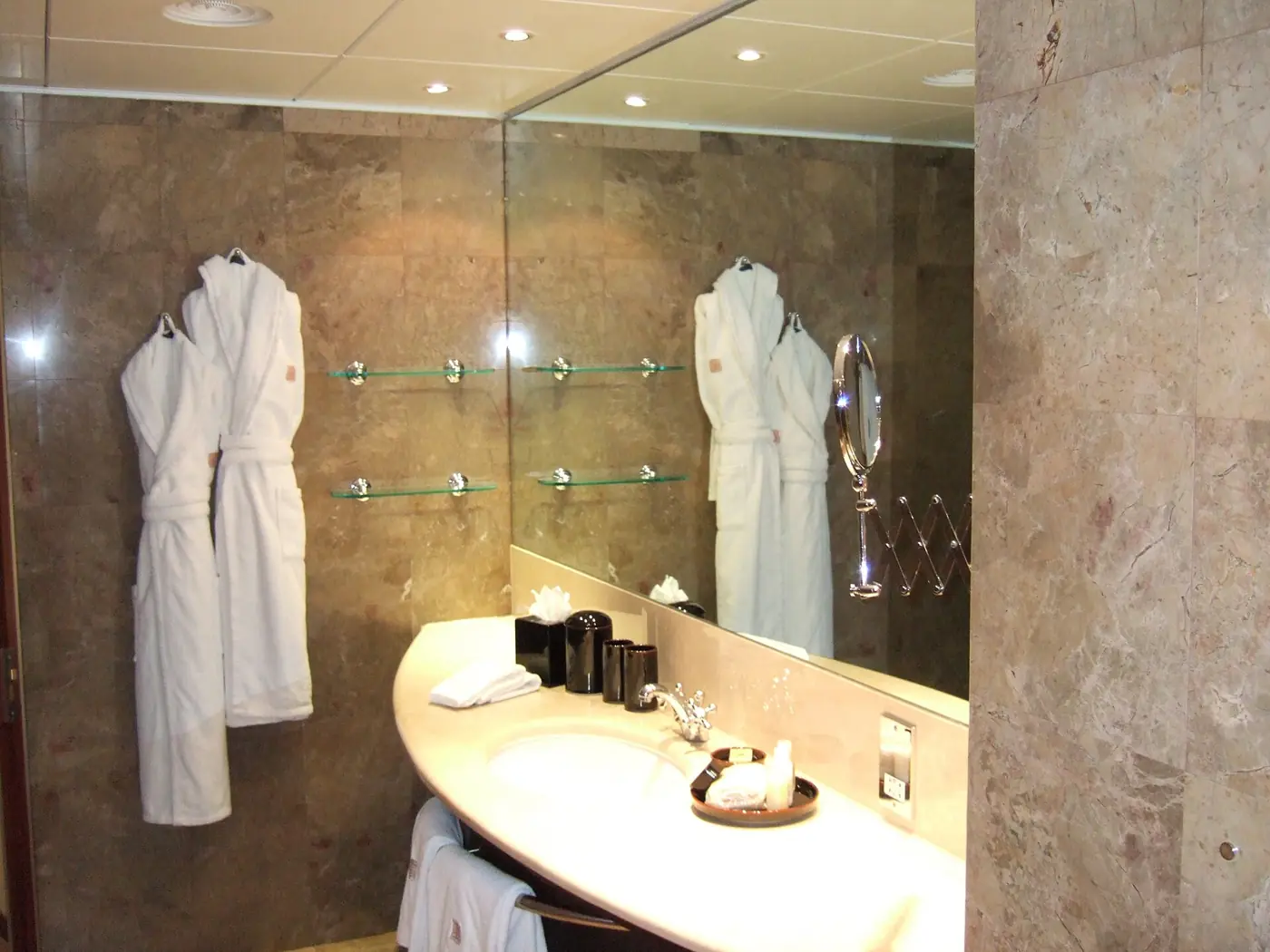
Robes look best hung on sturdy hangers with the belt tied loosely at the front or looped neatly. Hanging also helps the pile recover.
Folding
For shelves and lockers, fold robes the same way every time: fold sleeves in, fold in thirds lengthways, then fold in half or roll. A rolled robe looks generous and fits neatly in a cubby.
Slippers
Place slippers with the robe if your spa provides them. Disposable slippers are common; washable slippers need their own process.
06Storing clean robes
- Store robes fully dry and cooled.
- Keep them away from changing room humidity, saunas and pools.
- Use open shelving or ventilated cupboards.
- Do not stack too high; heavy stacks crush the pile.
- Rotate stock so every robe is used and washed evenly.
07Sizes and fit
A robe that is too small feels uncomfortable and exposing; one that is too large drags on the floor and gets wet and dirty.
- Offer at least two or three sizes, plus a generous larger size.
- Label sizes discreetly on the collar or with coloured piping.
- Keep a stock of each size in proportion to guest demand.
- Make sure larger sizes are always available; guests notice when they are not.
Inclusive sizing
Many spas find that offering a genuinely generous size makes a real difference to guests' comfort and confidence. It is a small detail that guests remember.
08Stains on robes
Robes collect stains around the collar and cuffs from make-up, hair products and skin creams, and on the back and seat from oils and wet pool areas.
| Stain | Common place | Notes |
|---|---|---|
| Make-up | Collar, inside neck | Oil and pigment; pre-treat |
| Massage oil | Back, seat, collar | Pre-treat; separate if heavy |
| Fake tan | Collar, cuffs, back | Can be stubborn |
| Hair dye | Collar | Often permanent |
| Sun cream | Everywhere in summer | Oily; some react with hard water |
| Tea and coffee | Front | Tannin; treat before drying |
Collar care
The collar is where robes show age first. Pre-treating collars at every wash slows yellowing and greying.
09Pools, saunas and thermal suites
Robes worn between pools, saunas and steam rooms are often wet and warm.
- Provide hooks near pools so robes are not dropped on wet floors.
- Collect wet robes promptly; do not leave them in bins in warm areas.
- Wash robes worn in chlorinated pools promptly.
- Expect robes from thermal areas to need more frequent washing.
10How many robes to own
Each guest uses one robe per visit, sometimes two if one gets wet early. Count robes used on your busiest normal day, multiply by the days robes are away being washed plus one, and add a margin for losses and stains.
Losses
Robes are among the most commonly taken items in spas and hotels. Allow for losses in your stock, and consider selling robes to guests who want one.
11When to replace robes
- The towelling feels thin, flat or hard even after correct washing.
- The collar is yellowed or greyed and does not recover.
- Seams, belt loops or pockets are torn.
- The robe has shrunk or lost its shape.
- Stains remain after treatment.
Replace in batches
Replace robes in batches so guests do not see one plush new robe next to a tired old one.
12Robes in hotel rooms
Hotel room robes live a different life from spa robes. They hang in a wardrobe, are worn for a short time in the evening or morning and may not be worn at all.
Unused robes
A robe that has not been worn may look perfect, but if it has hung in a room through several stays, it may have absorbed smells or dust. Many hotels launder robes on a set cycle even if they look unused, and always after a guest has worn them.
Checking for wear
Housekeeping should check robes for make-up on collars, damp, and signs of wear before leaving them in the next room.
Packaging
Some hotels present robes in a bag or with a small card. It reassures guests that the robe is fresh.
13The relaxation room
Guests often spend an hour or more in the relaxation room in their robe, sometimes dozing, sometimes eating or drinking. Robes pick up tea, juice, snacks and make-up from lying on loungers.
- Provide side tables so drinks are not balanced on laps.
- Offer a fresh robe if a guest spills.
- Clean lounger cushions and covers regularly; they transfer oils and dirt back to robes.
- Keep a few spare robes in the relaxation area for guests who get cold or wet.
14Warmed robes
Some spas offer warmed robes after treatments or for winter arrivals. It is a lovely touch, but it needs care.
- Only put fully washed, dried and cooled robes into warmers.
- Do not leave robes in warmers for long periods.
- Clean warmers regularly.
- Watch for robes from oil treatments; they should not go back into warmers before washing.
15Logos and embroidery
Many spas and hotels embroider robes with their name or logo. Robes are also popular with guests to buy.
- Choose embroidery threads that suit your wash temperature.
- Keep logos small and on the chest or back, away from high-wear areas.
- Order embroidered robes in larger batches so new stock matches.
- Consider offering embroidered robes for sale; it reduces robes leaving in suitcases.
16Colour choices
White robes look fresh and match most spas and hotels. They show make-up and oil marks clearly but can be washed confidently. Coloured or grey robes hide marks and can suit a spa's look, but they fade and may need cooler washes.
Separating colours
If you use more than one colour, wash each colour separately. Grey or coloured robes in a white load will tint the whole load.
17What guests notice about robes
Guests notice robes far more than spas expect, because robes are worn for so long and so close to the skin.
- Thickness and softness when they first put the robe on.
- Whether the robe fits, especially for larger or taller guests.
- A clean, fresh smell, with no hint of other people's perfume or lotions.
- A collar free of make-up marks.
- Belt loops that hold the belt and pockets that are useful.
- How quickly the robe absorbs water after a shower or pool.
Spa reviews often mention robes in passing, as "fluffy robes" or "the robes were a bit worn". Both kinds of comment influence future guests.
18Washing robes on site or at a laundry
Robes are heavy, bulky and slow to dry, which makes them harder to wash well on site than towels.
On site
Domestic or small commercial machines often cannot take more than a few robes at once, and dryers take a long time. Overloading leads to poor rinsing and damp seams. If you wash on site, size your loads properly and allow plenty of drying time.
At a laundry
Commercial machines and dryers handle robes in larger, properly sized loads. If you use a laundry, tell them your robe fabrics, ask about softener and drying temperatures, and agree how robes should be folded or hung for return.
19Robe fabrics in more detail
Knowing a little more about each fabric helps when choosing robes and when something goes wrong in the wash.
Terry towelling
Terry robes are made like towels: a base fabric with loops on one or both sides. The loops make them absorbent and soft, but they also hold water, so a wet terry robe is heavy and slow to dry. Terry robes are the most forgiving in the wash and can usually take warm to hot temperatures. They suffer most from softener and over-drying.
Waffle
Waffle robes have a honeycomb texture that traps air and gives a light, airy feel. They absorb reasonably well and dry quickly, which makes them practical for busy spas. Cotton waffle can shrink noticeably in its first hot washes, so allow for that when ordering sizes. Waffle can also lose its crisp texture if over-dried.
Velour
Velour robes are usually terry on the inside and sheared to a smooth, velvety surface on the outside. They look luxurious but the sheared surface can crush and show marks where it has been pressed flat. Avoid packing velour robes tightly while warm.
Microfibre and fleece
Microfibre and fleece robes feel very soft and warm and are light to carry. They do not absorb water as well as cotton, so they suit relaxation and lounging more than post-pool use. They dislike high heat and fabric softener, which can melt or flatten fibres.
Cotton and linen-look robes
Light cotton robes in kimono style are cool and elegant for summer or for relaxation areas. They crease easily and absorb less than towelling.
20Inspecting robes before they go out
A short inspection catches problems before guests do.
- Check the collar inside and out for make-up and yellowing.
- Check cuffs and the front for marks.
- Smell the collar; it is where oils and products concentrate.
- Check belt loops, pockets and seams.
- Check the size label is present and readable.
- Feel the robe: it should be soft, dry and evenly fluffy.
Robes that fail any check go back for rewashing, repair or retirement, not onto the shelf.
21Belts and belt loops
Belts are the part of a robe most often lost, tangled or damaged.
Losing belts
Belts slip out in the wash, go missing in lockers and end up in the wrong robe's bundle. Many spas sew one side of the belt to the back of the robe, or attach it with a small loop, so it cannot be separated.
Tangling
Loose belts wrap around other robes in the machine, twisting and stretching them. Tie belts loosely around the robe or wash them separately in a mesh bag.
Spare belts
Keep a small stock of spare belts in each colour and size, so a robe with a missing belt does not have to be taken out of service.
22Reducing robe losses
Robes are expensive and popular, so losses can be significant.
- Count robes out and in every day.
- Offer robes for sale at reception, with a card in changing areas or hotel rooms.
- Use distinctive robes, with embroidery or coloured piping, that are less likely to be packed by mistake.
- Check lockers at the end of the day for forgotten robes.
- In hotels, check for robes at departure and record any missing against the booking.
23Budgeting for robes
Robes are a significant purchase for any spa or hotel.
Stock
Your calculated number of robes in each size, plus a margin for losses, stains and repairs.
Washing
Robes are heavy, so washing by weight costs more per robe than for towels. Factor this in when comparing laundries or on-site washing.
Replacement
Plan to replace robes regularly as they wear, and budget for losses. Spreading replacement over the year avoids a sudden large expense.
Value
A good robe that stays soft for a long time costs less per wear than a cheap robe that hardens and thins within months.
24Slippers
Most spas give guests disposable slippers, which are simple and hygienic. Some use washable towelling slippers for a more luxurious feel.
Washable slippers
Washable slippers need their own process: wash in mesh bags, at the temperature their label allows, and dry fully, checking the soles and insoles. They wear out quickly and should be replaced when soles thin or towelling flattens.
Disposable slippers
Disposable slippers are given to each guest and not reused. Make sure the stock is enough for your busiest days.
25Robes and gowns in salons and clinics
Hair salons, beauty salons and aesthetic clinics use gowns, capes and wraps that do a similar job to spa robes, often with heavier product exposure.
Salon gowns
Gowns worn during colour, cutting and treatments collect hair, colour splashes, styling products and water. Many salons use dark gowns that hide colour marks. Wash gowns after every client if they are worn against skin, and shake out hair before washing.
Beauty wraps
Strapless towelling wraps for treatments and tanning are worn close to the skin and pick up creams, oils and tanning products. Treat them like robes worn after oil treatments.
Clinic gowns
Aesthetic and medical clinics may use cotton or disposable gowns. Washable gowns need to be laundered after every client and dried fully.
26When robes smell
A robe that smells stale, sour or of someone else's perfume ruins the welcome instantly. The causes are familiar.
Damp time
Robes left damp in bins, on hooks in humid corridors or in bags waiting for collection develop a sour smell quickly. Shorten the time between use and washing.
Oil and product build-up
Massage oils, body lotions and perfumes build up in the collar and back. Pre-treatment and separate washing of oily robes stop the smell from settling in.
Incomplete drying
Thick seams and collars that are not fully dry before folding produce a musty smell within hours. Check them before robes are put away.
Storage
Robes stored near pools, saunas or changing room showers absorb moisture from the air. Store them somewhere drier.
The test
Hold the collar of a clean robe to your face and breathe in. If it smells of anything other than clean cotton, something in the routine needs attention.
27Hygiene
Robes are shared between guests and worn against bare skin, so they must be properly clean, not just fresh-looking.
- One robe per guest, never reissued without washing.
- Robes from guests who were unwell are bagged and washed separately.
- Clean and used robes are never stored together.
- Hooks, shelves and cubbies are cleaned regularly.
28Getting new robes off to a good start
- Wash new robes once or twice before use to remove finishes and improve absorbency.
- Expect some lint in early washes; clean dryer filters often.
- Check sizes after the first washes, especially for waffle.
- Introduce new robes in batches so all guests get the same quality.
- Record the date each batch went into service.
29Robes through the seasons
In summer, lighter waffle or cotton robes are more comfortable, and sun cream on skin means more oily marks. In winter, thicker terry robes are welcome, but drying takes longer and robes are more likely to be stored damp. Some spas switch robe types with the seasons; if you do, store the off-season robes clean, dry and in breathable covers.
How ArkLaundry helps
Robes are washed and dried at the right heat for the fabric so they keep their softness. Bathrobes from your own stock are £4.95 each, excluding VAT.